Stainless Steel Well Screen Clogging: Diagnosis, Causes & Advanced Cleaning Guide
February 1, 2026
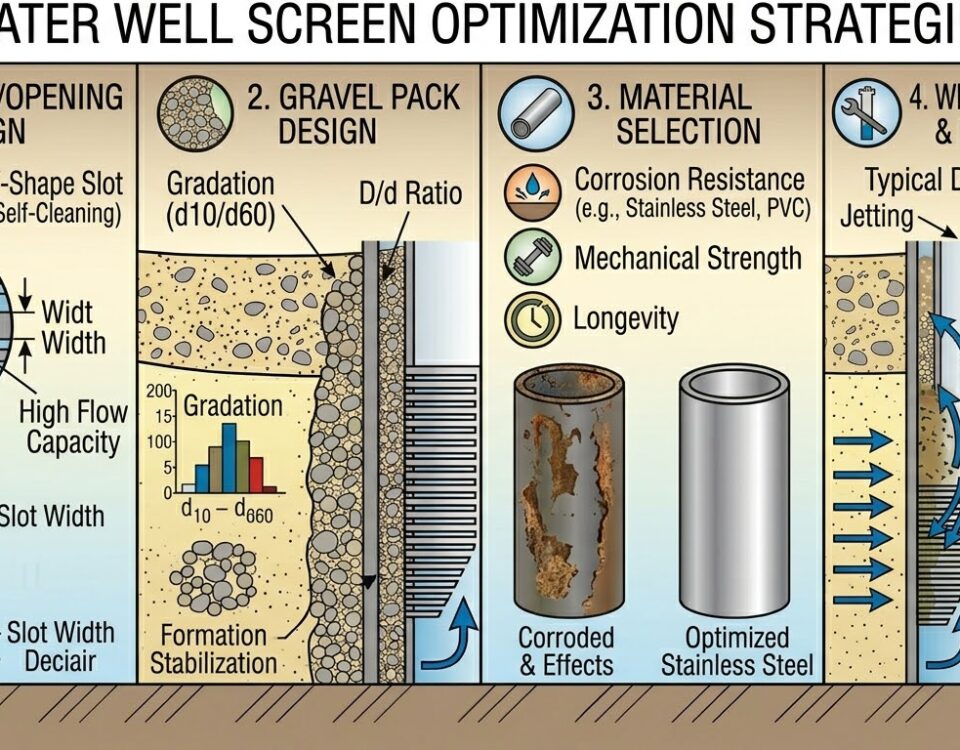
Optimization of Water Well Screen: Trade-Off Between Sand Control, Flow Performance, and Plugging Tendency
March 14, 2026Title: The Gritty Truth: Why Your Well Is Pumping Sand and Why I’m Probably Going to Tell You It’s Your Own Damn Fault
By: A Guy Who Has Pulled More Bad Screen Than You’ve Drilled Footage
Right then. You’re calling me because your pump sounds like it’s chewing gravel, your water tank looks like a milkshake, and your faucets are wearing out faster than you can replace them. “Pumping sand,” you say. And then you ask the magic question: “Is my water well screen the wrong one?”
Simple answer? Maybe. Complicated, expensive, and ugly answer? Probably, but not for the reasons you think. I’ve been doing field failure analysis on water wells for going on thirty years. I’ve flown into oil camps in the middle of the Sahara, walked into farmyards in Nebraska, and stood on rig floors in the Marcellus Shale. And I’ll tell you right now, a well that starts pumping sand is like a patient showing up with a fever. The fever isn’t the disease; it’s a symptom. If you just treat the fever, the patient dies. If you just replace the pump, the well collapses.
So, let’s park the truck, crack open a thermos of something strong, and talk about why your hole in the ground is trying to turn itself into a desert.
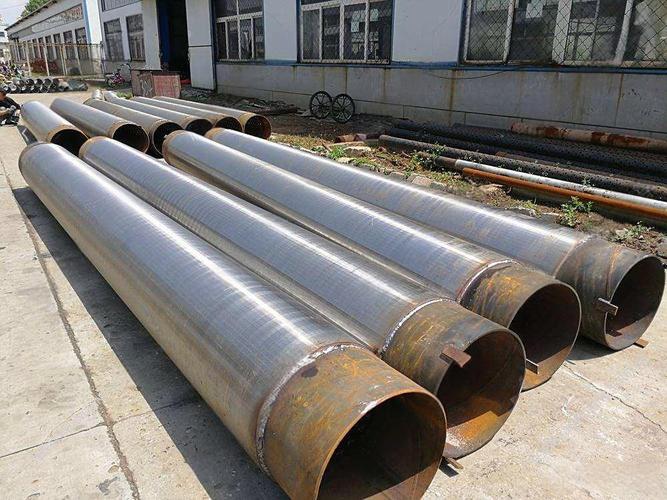
The First Question: Is It New Money or Old Money?
Before I even look at your screen specifications, I need to know if this well is brand spanking new or if it’s been running quiet for ten years. This single fact tells me 80% of what I need to know.
If this is a new well—we just drilled it, developed it, and put a pump in it—and it’s pumping sand, I’m looking at one of two things: Incompetence or underestimation.
If this is an old well that’s been a champ for a decade and suddenly decided to start puking sand, I’m looking at failure. Plain and simple. Something broke. Something degraded. Something gave up the ghost.
Let’s take the old well first, because it’s usually the most heartbreaking.
Scenario A: The Veteran Well That Just Gave Up
You’ve had good water for years. Crystal clear. Then one Tuesday, boom. Sand. You’re panicking. I don’t blame you.
1. The Obvious: The Pump’s Intake Is Too Low (And It’s My First Guess)
I can’t tell you how many times I’ve pulled a pump to find the intake screen sitting right in the sump. The sump is the part of the well below the main screen. It’s a “settling basin.” It’s designed to catch fine sand that sneaks through. It should be full of sediment.
The fix? Pull the pump, measure the sediment level, and raise the pump intake. Simple job. Costs a few grand. Beats drilling a new well.
2. The Corrosion Factor: The Silent Killer
You mentioned a stainless steel screen? Probably 304, right? Cheap bastards. (Sorry, but it’s true).
I remember a job in coastal Louisiana. A water well for a shrimp processing plant. Sweet water for ten years, then sand. We pulled the screen. Looked like Swiss cheese. The chlorides in the brackish water had attacked the 304 stainless. It started with pitting corrosion—little tiny holes you can’t even see. Those holes grew, connected, and boom—the screen literally fell apart. The slots weren’t slots anymore; they were gaping holes.
Formula Time (The Simple Version):
Corrosion rate is a beast. We use the Langelier Saturation Index (LSI) and Ryznar Stability Index to predict this, but for chlorides, it’s about the metal.
We can look at the Pitting Resistance Equivalent Number (PREN).
PREN=%Cr+3.3(%Mo)+16(%N)For 304, with no Moly, it’s low. For 316L, it’s better. For super-duplex? Rock star. If your water is aggressive, and you cheaped out on 304, the screen didn’t “fail.” You just watched it dissolve. It did exactly what the chemistry dictated it would do.
3. The Physical Break: The Crunch
Sometimes, it’s just brute force. I worked a well in Pennsylvania where the casing had actually sheared. Ground movement, maybe a minor seismic event we don’t even feel, or just the slow creep of the Appalachian geology. The casing shifted, the screen joint separated, and the pump was sitting in an open hole, sucking sand directly from the formation.
We ran a caliper log. The tool went down fine, then hit a ledge where the casing had offset by half an inch. It ripped the screen apart. The only solution? Abandon the well and redrill. That’s the ugly one.
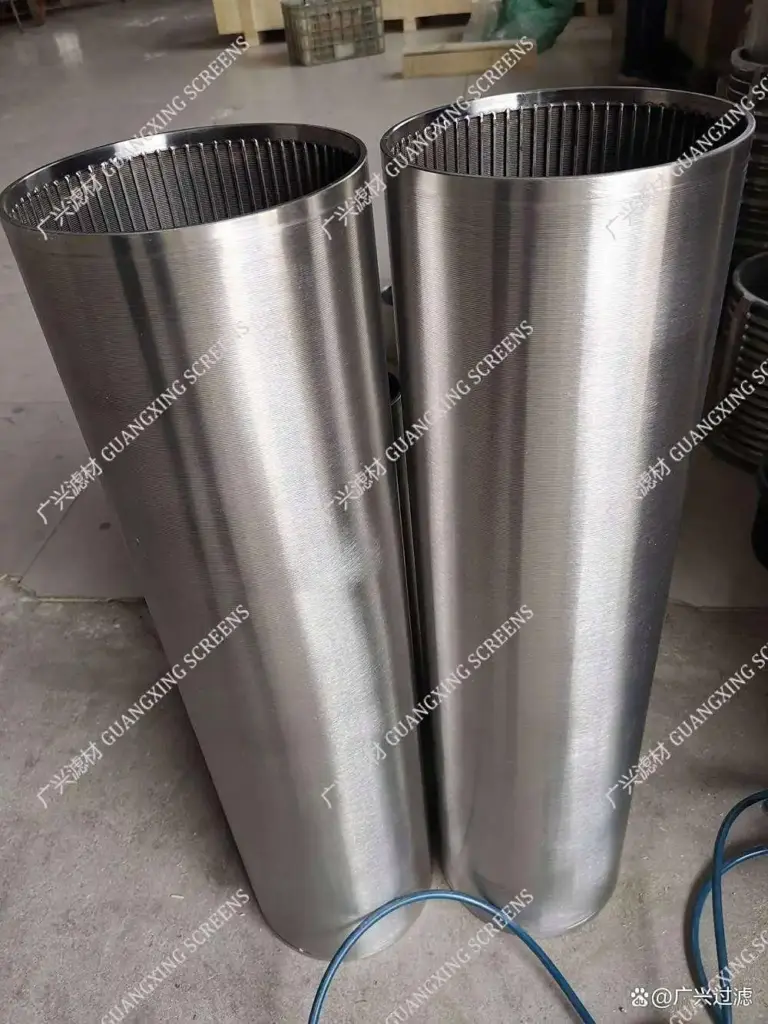
Scenario B: The Brand-New Well That Screams Like a Banshee
This is where I get to be the bad guy. This is where I have to tell the driller he messed up, or worse, tell the hydrogeologist his pretty report was wrong.
1. The Gravel Pack: Did You Even Use One? Is It the Right One?
You said you think the screen is wrong. Let’s look at the gravel pack first. The screen and the pack are a team. One doesn’t work without the other.
We have a rule. It’s actually a formula. The “Terzaghi Filter Rule” or just basic sand control design.
For the gravel to hold back the formation sand, the ratio of the grain sizes has to be just right.
D15 (Gravel)D85 (Formation)<5And:
D15 (Gravel)D15 (Formation)<5 to 40
What that means in plain English: If the gaps between the gravel particles are too big, the formation sand will just wash right through them and hit the screen. Then the screen has to stop everything, and it will blind over or erode instantly.
I was on a job in the High Plains aquifer—great sand, uniform. The driller used “pea gravel” because it was cheap. Pea gravel! It was like trying to filter coffee through a colander. The formation sand just blew right through it and sandblasted the screen slots wide open in six months.
The fix? You can’t fix a bad gravel pack without pulling the whole casing and starting over. It’s a multi-hundred-thousand-dollar mistake.
2. The Slot Size: You Missed the Cutoff
You want to know about the screen itself. Okay. Slot size. This is where the lab work comes in.
We take a sample of the formation. We do a sieve analysis. We plot it on a semi-log graph. We find the D10, the D60, the uniformity coefficient.
The old rule of thumb for a slotted pipe or a wire-wrapped screen? You pick a slot size that retains 40% of the formation sand.
So if we do a sieve analysis and the sand is well-graded, the D40 (the size at which 40% of the sample is finer) might be 0.025 inches. So you pick a 0.025-inch slot.
3. The Open Area Fallacy: The “More is Better” Trap
Everyone thinks more open area is better. It’s not. It’s about velocity.
You get a louvered screen—you know, the ones that look like they have little shutters punched out of a pipe. They have terrible open area, maybe 5-8%. Then you get a wire-wrapped screen. 20%, 30%, even 40% open area.
The American Petroleum Institute (API) has a recommended practice. You want the entrance velocity through the screen to be low. Really low. Like, less than 0.1 feet per second for unconsolidated sand.
Why? Because high velocity pulls fines. It’s called ” piping” or “suf
Why? Because high velocity pulls fines. It’s called “piping” or “suffosion.” The water moves so fast it physically plucks individual sand grains out of the matrix and carries them into the well.
Vent=QAopen
Where Q is your flow rate, and Aopen is the open area of the screen.
If you have a high open area screen, Aopen is big, Vent is low. Good. But if you have a crappy punched screen with low open area, you need a longer screen to get the same Aopen. If you don’t, Vent spikes. That high-velocity water jets into the well, and right next to the slot, it’s like a pressure washer on the formation.
I had a well in West Texas. Permian Basin. They wanted 1,000 gallons a minute from a thin sand layer. They used a 20-foot section of high-quality wire-wrap. Good open area. Math said velocity was safe. But the aquifer was so thin, the vertical flow component into the screen ends was huge. We ended up with localized high velocity at the top of the screen, which eroded a cavity behind the casing, collapsed the formation, and filled the bottom of the well with sand. The screen wasn’t wrong. The length was wrong. We needed 40 feet of screen to spread that flow out, but the geology wouldn’t allow it. Sometimes you just can’t get the water you want without making sand. That’s a hard conversation to have with a client.
The Devil in the Development Details
Here’s a dirty secret. You can have the perfect screen, the perfect gravel pack, and still pump sand because the well was never developed properly.
When you drill a well, you smear mud cake on the borehole wall. That mud cake has to be broken down. The fine particles (the “fines”) have to be pulled out of the formation right next to the borehole.
If the driller just sets the screen and gravel packs and then throws a pump in it, you haven’t developed the well. You need to surge it. Over-pump it. Backwash it. You need to create a reverse flow to pull those fines out and stabilize the formation.
I saw a municipal well in the Midwest. Brand new. $500,000 project. They hired the lowest bidder for the drilling. The driller did the bare minimum development—maybe six hours of air lifting.
They started the pump test. Clear water for the first hour. Then it started getting cloudy. By hour four, they were pumping sand at a rate that would fill a dump truck in a week.
They called me. We ran a camera. The formation right outside the screen looked like it had been fluidized. It was disturbed. All the fines that should have been removed during development were still there, and the high-velocity pump test just pulled them all into the well.
The driller blamed the screen. He said the slots were too big. We pulled a sample of the sand from the well. 30% of it was silt and fine sand smaller than the slot size! It wasn’t the screen’s fault. The screen did its job. The problem was the stuff smaller than the slot was never cleaned out of the formation. We had to spend another two weeks developing the well with a surge block and high-lift pumping just to save it. The driller went broke on that job. He deserved it.
The Nitty-Gritty: Screen Types and Their Weird Little Quirks
Let’s talk hardware for a second, because the type of screen matters.
-
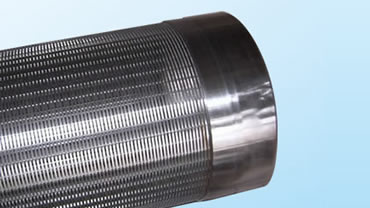
Slotted Pipe (Mill Slots): Cheap. Easy to find. But the slots are usually tapered from the cutting process. They can wedge sand grains. They have terrible structural strength if you cut too many slots. I’ve pulled these out of the ground bent into a U-shape because the formation collapsed and the pipe just crumpled. They’re fine for shallow, low-yield domestic wells. That’s it.
-
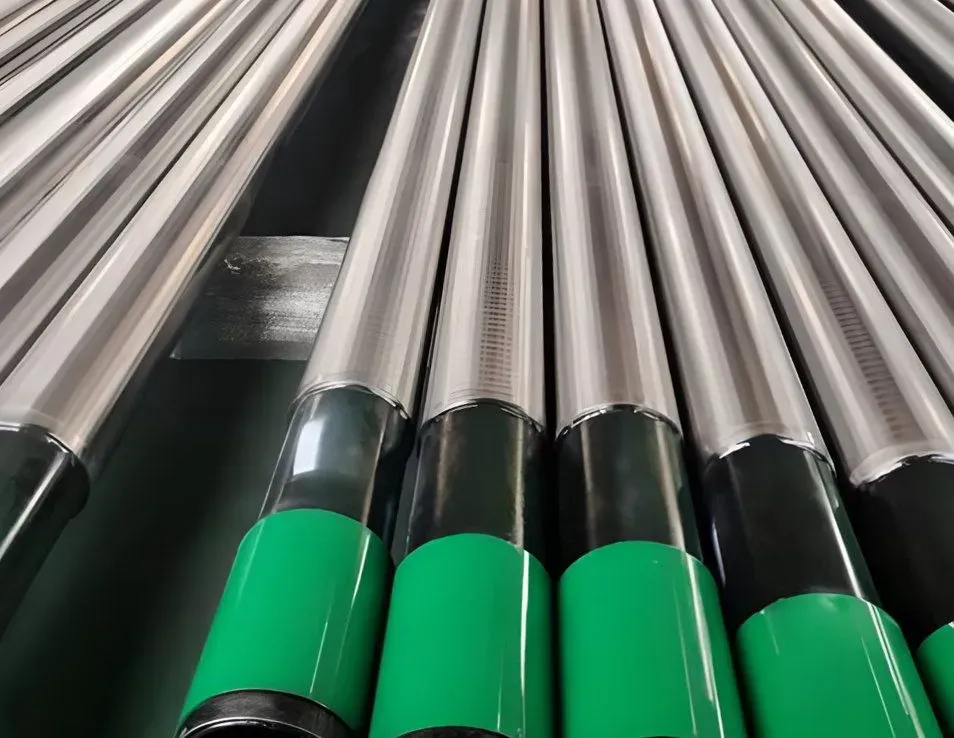
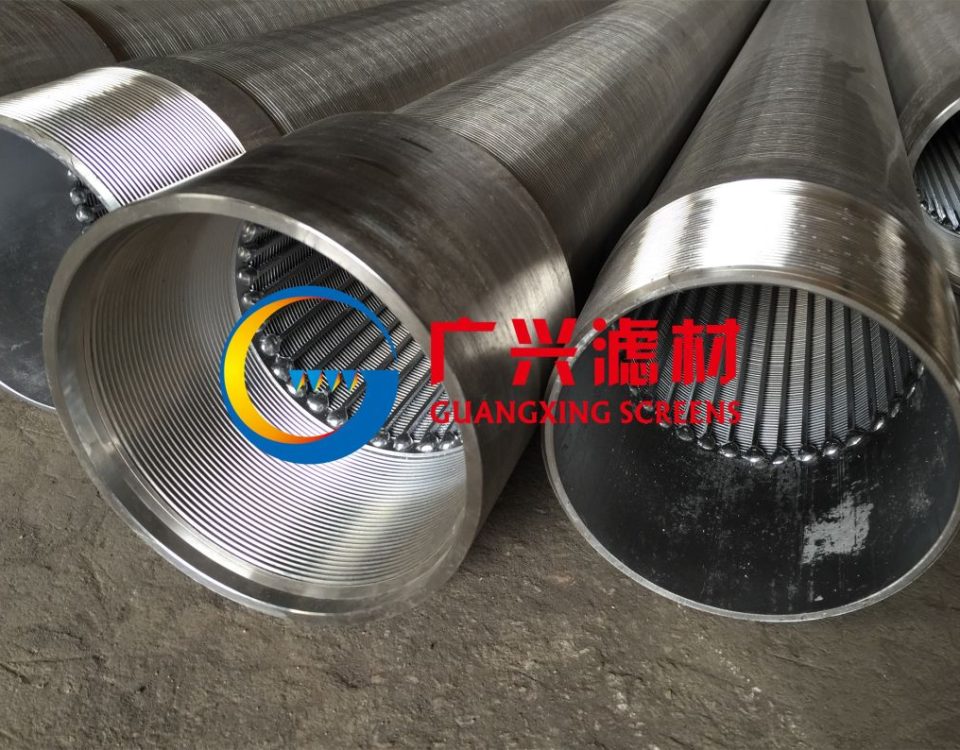
Continuous Slot (Wire-Wrapped): The workhorse. The wire is wrapped around rods and welded. This is what I spec for anything serious. You get precise slot control. High open area. The triangular wire shape is key. It’s “non-clogging.” A sand grain touches the wire at two points, not one, so it tends to bridge and not get stuck. I love these things.
-
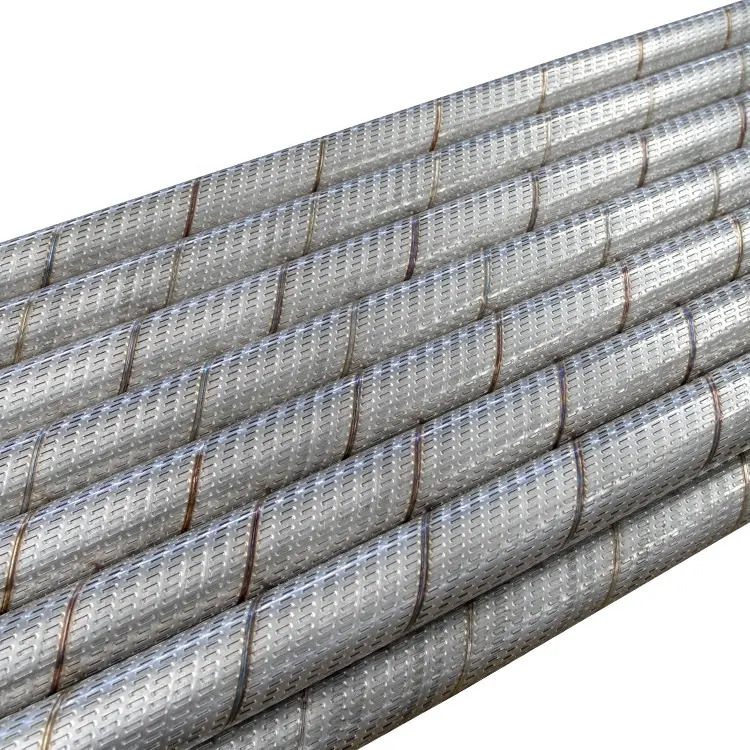
Louvered (Punched): I hate them. I really do. They are stamped. The metal is stressed. They are prone to fatigue cracking. The louvers act like little spoons, stirring up turbulence. I’ve seen them corrode at the stress points faster than the rest of the pipe. Avoid them.
-
Pre-Packed Screens: These have the gravel pack built right onto the screen in the shop. Sounds great, right? It can be, for thin sand zones. But you have to be so careful installing them. If they bump the side of the hole, the gravel pack can dislodge. And if they get scaled up with minerals, you can’t chemically treat them as easily because the chemicals get trapped in the pack. I used one in a well in Nevada that had high arsenic. We tried to acidize the screen to clean it, and the acid dissolved the cementing agent in the gravel pack. The gravel fell off, and we were left with a bare screen in a sand formation. We lost the well.
What the Data Tells Us (And a Little Table)
When I walk onto a site, I ask for three things:
- The driller’s log.
- The sieve analysis of the formation.
- The pump test data.
If they can’t give me #2, I get angry. If you don’t know what the sand looks like, you’re guessing. And guessing costs money.
Here’s a typical breakdown I might use to explain to a client why their well failed. I’d scratch this on the back of a napkin, but for you, I’ll make it look fancy.
Well “A” Failure Analysis: Suspected Screen/Gravel Pack Mismatch
| Parameter | As-Built Specification | Recommended Specification (Based on Sieve) | Analysis |
|---|---|---|---|
| Formation D10 | 0.015 in | 0.015 in | (Consistent) |
| Formation D60 | 0.035 in | 0.035 in | (Consistent) |
| Uniformity Coeff (Cu) | 2.33 | 2.33 | Well-graded sand. Good. |
| Gravel Pack D15 | 0.110 in | 0.065 in | MISMATCH! Gravel too coarse. |
| Slot Size | 0.040 in | 0.025 in | MISMATCH! Slot too big for gravel. |
| Design Velocity @ 500 gpm | 0.18 ft/sec | 0.09 ft/sec | MISMATCH! Velocity too high. |
Looking at that table, it’s obvious. The gravel is too big to hold the formation sand. The screen slots are too big to hold the gravel. So what happened? The formation sand washed through the gravel pack. Without the gravel to protect it, the high-velocity water hit the too-big screen slots and just pulled the formation sand right into the pump. The screen became a strainer, not a filter. It was doomed from day one.
The Future Is Smart (But We Still Dig Holes)
You know, we’re seeing new tech now. “Smart screens” with fiber optics in them to measure temperature and pressure along the entire length of the screen in real-time. We can see exactly where the water is coming in and where the velocities are spiking. It’s incredible data.
But it doesn’t change the basics. You still have to understand the sand. You still have to pick the right slot. You still have to develop the damn well properly.
I see a trend now with all this ESG and water stewardship. Big companies are getting audited on their water use. They’re finding wells that were drilled thirty years ago by guys like me, and they’re failing because of corrosion or old age. There’s a huge market now for “well rejuvenation” and “screen retrofitting.” We’re pulling old screens and lining the wells with smaller diameter, modern wire-wrap screens. It’s like keyhole surgery for water wells.
So, Is Your Screen Wrong?
Maybe. But before you blame the screen, answer me this:
- Did the well ever pump clean? If yes, it’s not the screen. Something changed. (Corrosion, pump depth, sediment buildup).
- Did it pump sand from day one? If yes, then the design or installation was wrong. (Slot size, gravel pack, development).
- Did you recently change the pump? Did you put in a bigger one? Because if you increased the flow rate, you increased the velocity. You might have just exceeded the critical velocity for that formation. The screen didn’t fail; you overwhelmed it.
My advice? Pull a sample of the sand coming out. Sieve it. Send it to a lab. Then pull the pump and run a camera. Look at the screen. Is it broken? Is it corroded? Is it buried in sand?
Don’t just throw a new pump in there. That’s like putting a new engine in a car with a rusty frame. The first bump in the road, it’s all over.
Do the detective work. It’s cheaper than drilling a new hole. Trust me. I’ve made my living cleaning up other people’s messes, and I’d rather make a living building them right the first time. But nobody ever calls me for that. They only call when the sand starts flying.
1. The Well Anatomy: Where the Sand Is Coming From
This is your basic well. Casing, screen, sump. Look at it. Understand it. This is where we start.
          GROUND SURFACE
    ========================
             ||
             ||  <-- Pump (should be set above the screen top)
             ||      (Pump Intake)
    ------------------------  <-- Surface Casing Seat
    |                      |
    |    ~~~~~~~~~~~~~~    |  <-- Pumping Water Level (Drawdown)
    |                      |
    |----------------------|  <-- Casing / Screen Transition
    |                      |
    |  [||||||||||||||||]  |  <-- WELL SCREEN (The "Water Well Screen")
    |  [||||||||||||||||]  |      Water enters here. Slots are sized.
    |  [||||||||||||||||]  |      This is what you're asking about.
    |  [||||||||||||||||]  |
    |----------------------|  <-- Bottom of Screen
    |                      |
    |  ..................  |  <-- Sump (Blank Pipe / Settling Basin)
    |  ..................  |      THIS IS CRITICAL. It catches the fines.
    |  ..................  |
    |  ##################  |  <-- SAND (Normal sediment accumulation)
    |  ##################  |      Over years, this pile grows.
    |                      |
    ========================  <-- Total Depth (TD)
            BOTTOM HOLE
The Problem:
If that ###### sand pile creeps up and covers the bottom of the [|||||] screen, your open area drops. Velocity spikes. You start pumping sand.
I saw it in West Texas. A cotton farmer called me, frantic. Sand destroying his center pivot sprinklers. Pulled the pump. The sand pile was twelve feet high. Buried half the screen. The pump intake was sitting right in the turbidity zone. Cost him $8,000 to pull and raise the pump. He could have spent $200 on a sounding measurement five years ago and avoided it.
2. Velocity Kill: Why “More Open Area” Is Not Just Marketing
This diagram shows the flow lines. The top is a bad high-velocity scenario. The bottom is a good low-velocity scenario.
    BAD SCENARIO (Low Open Area / Partially Blocked Screen)
    --------------------------------------------------------

    Formation (Sand)      Screen Slot        Inside Well

    .................
    .               .       ====---->
    .   SAND        .      /      \
    .   GRAINS      .     |        |   <-- High Velocity Jet
    .   GET PULLED  .      \      /       Water screams in.
    .   IN          .       ====---->     Fines get mobilized.
    .      o        .            ^
    .     o o       .            |  <-- Sand grains follow water.
    .    o   o      .            |      Erosion starts here.
    .   o     o     .            |
    .................    |||||||||
                          WELLBORE

    Explanation: Water is forced through a small opening.
    The velocity is high. It scours the formation.
    This is how you get a "sand boil" behind the screen.


    GOOD SCENARIO (High Open Area / Proper Velocity)
    --------------------------------------------------------

    Formation (Sand)      Screen Slot        Inside Well

    .................
    .               .      =========
    .   SAND        .     <   -   >
    .   GRAINS      .      \  |  /
    .   STABLE      .       \ | /        <-- Low Velocity
    .   BRIDGING    .        \|/             Laminar flow.
    .      o        .         |              Grains stay put.
    .     ooo       .         |
    .    ooooo      .         |
    .   ooooooo     .         |
    .................    |||||||||
                          WELLBORE

    Explanation: Water flows gently from all directions.
    The sand grains form a natural arch (bridge) over the slot.
    No movement. Clear water.
The Formula (We already did this, but look at the picture):
High Velocity = Low Open Area OR High Pumping Rate.
V=QA
If you double Q (pump rate), you double velocity. If you cut A (open area) in half, you double velocity. It’s not magic. It’s arithmetic.
3. The Gravel Pack Sieve: A Picture of Failure
This one is for the gravel pack nerds. It shows the relationship between formation sand, gravel, and the screen slot.
    THE "HOLDING POINT" PRINCIPLE
    --------------------------------------------------------

    LEGEND:
    o = Formation Sand Grains (Small)
    O = Gravel Pack Particles (Larger)
    [ = Screen Slot Opening


    SCENARIO A: CORRECT DESIGN - STABLE

        O   O   O   O   O   O   O   (Gravel Pack)
        o o o o o o o o o o o o o   (Formation Sand)
         \  |  /   \  |  /   \  |
          \ | /     \ | /     \ |    (Stable bridges form)
           \|/       \|/       \|
           [ ]       [ ]       [ ]   (Screen keeps gravel in)
           ===       ===       ===

    The gravel is sized to hold the formation.
    The screen is sized to hold the gravel.
    Triple redundancy.


    SCENARIO B: GRAVEL TOO BIG - CATASTROPHE

        O       O       O       O    (Gaps between gravel are huge)
          o o o   o o o   o o o      (Formation sand washes through)
             |       |       |
             |       |       |       (No bridging possible)
             v       v       v
            oo       oo      oo      (Sand hits the screen directly)
            [ ]     [ ]     [ ]      (Screen now has to stop formation sand)
            ===     ===     ===

    This is what I was talking about with the "pea gravel" disaster.
    The gravel pack failed at its ONE JOB.
4. The Pump Intake Mistake: A Simple Drawing of a Dumb Problem
This is the most common, most avoidable, and most profitable mistake for guys like me.
    WRONG (Pump Intake Too Low)
    ----------------------------

            PUMP MOTOR (at surface)
               |
               | (Drop Pipe)
               |
           [PUMP]  <-- Pump Intake
               |
               |  <-- Suction Pipe
               |
        [|||||||||]  <-- Screen (Top)
        [|||||||||]
        [|||||||||]
        [|||||||||]  <-- Screen (Bottom)
        ~~~~~~~~~~~  <-- SAND FILL (High level)
          (Sand)

    Pump is sucking water from the bottom of the screen,
    right where the sand is fluidized.


    RIGHT (Pump Intake Raised)
    ---------------------------

            PUMP MOTOR (at surface)
               |
               | (Drop Pipe)
               |
           [PUMP]
               |
               |  <-- Suction Pipe (LONGER NOW)
               |
        [|||||||||]  <-- Screen (Top)  <-- PUMP INTAKE HERE
        [|||||||||]
        [|||||||||]
        [|||||||||]  <-- Screen (Bottom)
        ~~~~~~~~~~~  <-- SAND FILL (High level)
          (Sand)

    Pump is pulling from the top of the screen.
    Clean water. Sand stays at the bottom.
    Simple fix. No new screen needed.
5. Corrosion Failure: What Swiss Cheese Looks Like Underground
This is what happens when you put 304 stainless in water with 2,000 ppm chlorides. I pulled a screen like this in Louisiana. Looked exactly like this drawing.
    CORRODED SCREEN (Plan View - Looking down at a section of pipe)
    --------------------------------------------------------

    BEFORE INSTALLATION (Brand New):

    ||||||||||||||||||||||||||||||||||
    ||||||||||||||||||||||||||||||||||  <-- Uniform slots
    ||||||||||||||||||||||||||||||||||


    AFTER 10 YEARS OF BAD CHEMISTRY:

    ||  |   |||    ||||   |  |  ||||
    |    ||   |  ||    |O|    |||   |  <-- Slots are now...
    || |O|  |||   |   O   | ||    | |      Irregular.
    |    |   | O | ||    |   |  O |  |     "O" = Pits that turned into holes.
    ||  ||    |   |  O  |||    ||  |

    This isn't "sand erosion."
    This is the metal literally dissolving.
    The screen didn't fail. It vanished.